
Digitizing prices are all over the place. Here's what actually drives the cost in 2026, what to expect per job, and why the cheapest quote usually costs you the most.

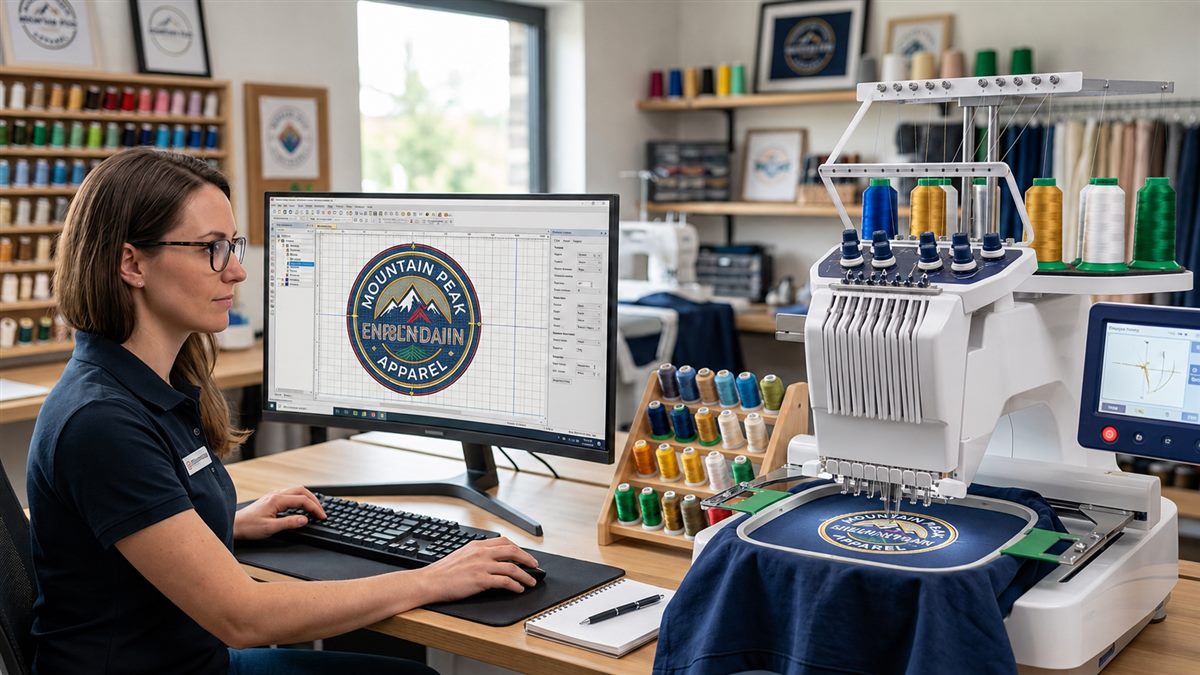
If you've ever asked a digitizer for a price and gotten a different answer from every single one, you're not imagining it. Embroidery digitizing cost is all over the place. The same logo can be quoted at two dollars and at twenty-five, on the same day, by people who both call themselves professionals.
Here's what actually drives the cost, what you should expect to pay in 2026, and how to read a quote so you know what you're getting for the money.
Most digitizers charge one of two ways: a flat fee per design, or a rate per 1,000 stitches. A simple left-chest logo usually lands somewhere between $10 and $25, or the naira equivalent. A detailed design, a full jacket back, or anything with small text and lots of color changes climbs from there.
But the number on its own tells you almost nothing. Two digitizers can both quote you $15 and hand you completely different files. One runs clean. The other puckers, breaks thread, and looks cheap after one wash.
Knowing which model you're being quoted on saves a lot of confusion later.
Flat fee per design. One price for the job, agreed before work starts. Easiest to budget for, and most common for logos and one-off orders. The risk sits with the digitizer: if your artwork turns out to be more work than it looked, that's their problem, not your invoice.
Per 1,000 stitches. The price scales with the size of the finished file. Say a digitizer charges ₦500 per 1,000 stitches. A left-chest logo at around 8,000 stitches comes to ₦4,000. The same logo blown up to a jacket back might run 45,000 stitches, so ₦22,500. Fair in principle, since bigger really does mean more work. The catch is you don't know the stitch count until the file exists, so you're agreeing to a price you can't check yet.
If you're quoted per 1,000 stitches, ask for an estimated count up front and a cap. Anyone who has done your kind of work can give you a range within a few thousand stitches.
Embroidery digitizing cost varies, but here's the rough shape of it from what I see in this market:
That's the quality ladder. The other way to think about price is by the job in front of you, because a monogram and an agbada motif are not the same afternoon's work:
This is where quotes that look identical stop being identical. Before you agree to anything, get answers on these five:
There are services that will digitize anything for a couple of dollars. Here's what that actually buys you.
The file comes back looking fine on screen. You load it, hoop your garment, and run it. The letters are thin. The fabric ripples. The design sits stiff like a plastic patch. Now you've wasted thread, wasted stabilizer, and often a ruined garment, on a client order with a deadline.
Do the arithmetic once. You saved maybe ₦3,000 on the file. The garment you ruined cost more than that on its own, before you count the thread, the stabilizer, the hour of machine time and the hour you spend re-doing it. And that's the good outcome, the one where you catch it yourself. The bad outcome is the client catching it.
Back when I was still taking digitizing work, I had a client in Ghana who went to cheaper digitizers because the price was lower. He kept coming back for anything that mattered. The premium customers, the jobs with no room for a mistake. Those files ran smoothly and didn't stress his machine, and that was worth more to him than the few thousand naira he saved elsewhere. Most embroidery business owners learn that the hard way.
Cheap digitizing isn't cheap. You just pay for it later, in remakes and reputation.
It's worth understanding where the very low prices come from, because it isn't magic and it isn't generosity.
Some of it is auto-digitizing. Software traces the image and produces stitches without anyone deciding how the design should be built. It's instant, which is why it's cheap, and it's why the letters come out thin and the fabric puckers. Software doesn't know your logo has 3mm text in it, or that you're stitching on a stretchy polo.
Some of it is volume. Large shops running hundreds of files a day, paying each digitizer per file, nobody spending more than a few minutes on yours. Fine for simple shapes. It falls apart the moment your job needs a judgment call. And some of it is just a first-order price, set low to win you, with the real rate arriving on job two.
None of that means every cheap file is bad. It means a cheap price is a reason to ask for a stitch-out, not a reason to celebrate.
If you're running an embroidery business here, you're almost certainly outsourcing your digitizing, paying per design, every time, while you wait on someone else. That makes embroidery digitizing cost a running expense rather than a one-off.
Run the numbers on a year of that. Fifteen designs a month at ₦4,000 each is ₦60,000 a month, and ₦720,000 a year. If you're busier, say thirty designs a month, you're at ₦1.4 million a year on files alone. For most shops it's one of the biggest costs they've stopped noticing, and it never goes down. It also sets your ceiling on speed, because every rush job has to wait for someone else's queue.
Most people reading this can't say what they spent on digitizing last year, and that's the real problem. If your orders and costs live in a notebook and three WhatsApp chats, the number doesn't exist anywhere. EMBBA is what we built for that: orders, clients, pricing and production in one place, so cost per job is something you can look at instead of guess at.
You can keep paying per design forever. Or you can do one of these.
Stop commissioning what you don't need to commission. A client's logo has to be digitized for that client. A common motif doesn't. Agbada patterns, decorative work, seasonal designs, the things you stitch again and again: those already exist as machine-ready files for a fraction of what custom digitizing costs. EmbGig is a marketplace of them, digitized by African digitizers, instant download, commercial use included. If you're paying custom prices for a design somebody has already made properly, you're spending money for no reason.
Learn to digitize yourself. It isn't a weekend skill, and anyone who tells you it is is selling you something. But it's learnable, and most of my students are digitizing the basics inside a week. After that, every order you take keeps its full margin instead of paying a middleman. You also stop waiting. A client changes their logo at 9pm the night before a delivery and you just fix it.
That's exactly what our Digitizing Mastery course teaches, from the fundamentals to logos, monograms and agbada you can charge for. If you're tired of the per-design bill, that's where to start.
Because they're not selling the same thing. One is charging for a few minutes of software output. The other is charging for someone who looks at your artwork, asks what fabric it's going on, builds the file in a sensible order, and tests it. Same logo, different job.
You own what you were given, which for most jobs is the stitch file. The editable source file is a separate question and most digitizers keep it unless you agree otherwise. If you want it, ask before the job starts, when it's still cheap to negotiate.
For a one-off, usually not. For anything you're about to run across a hundred garments, yes, every time. The cost of one stitch-out against the cost of a hundred ruined shirts isn't a close call.
Sometimes, for simple designs. It's usually auto-digitized and thrown in to win the garment order, so treat it as a bonus rather than a service. Test it on one piece before you trust it with a run.
The Academy turns articles like this into proper courses, with video lessons, assessments, and people to learn alongside.