
The wrong digitizer shows up fast in thread breaks and puckering. How to judge one before you pay, what to send them, and how to read a stitch-out when you're not a digitizer yourself.

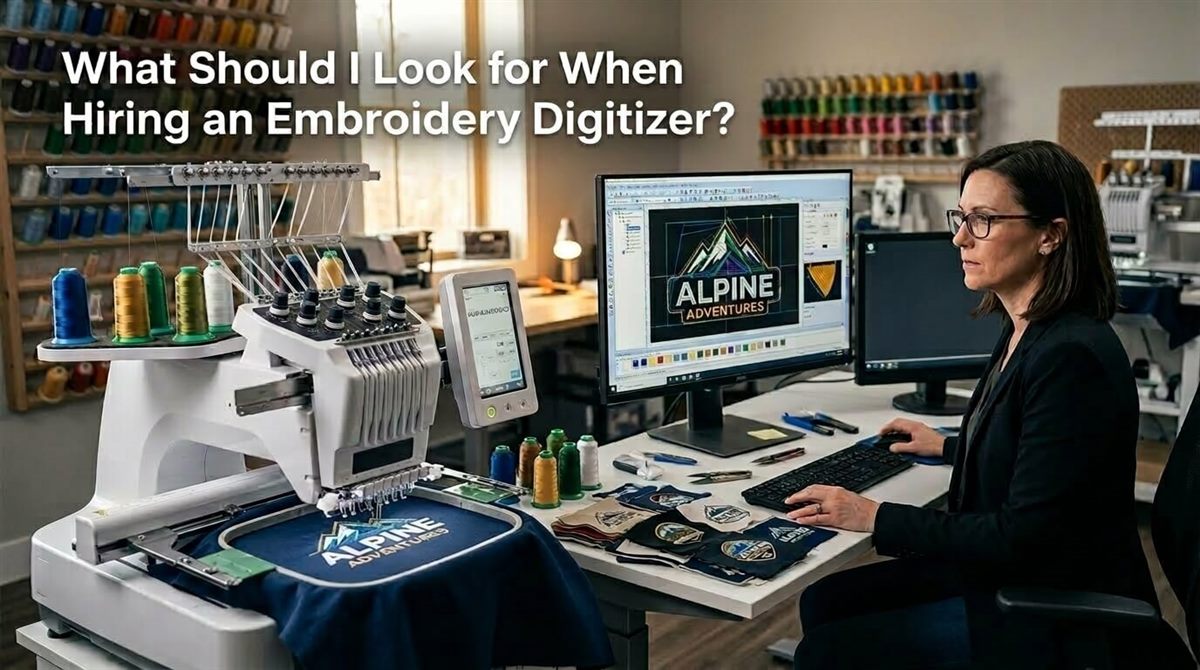
Hiring an embroidery digitizer is a decision that shows up fast when you get it wrong. Thread breaks, puckering, a design that fights the machine the whole way through the run. Hiring the right one means the file just works and you stop thinking about it. This is one of those areas where cutting the price usually costs you more in the end, because bad digitizing is obvious the moment it hits fabric.
I've been digitizing and running embroidery machines for over fifteen years, so this isn't theory. Here's what actually separates a professional from someone who just owns the software.
A good file and a bad file cost the same to stitch. The difference is what comes out the other end.
Good digitizing runs clean: fewer thread breaks, less stress on the machine, sharp detail, faster production, and a client who's happy. Bad digitizing gives you the opposite. Ragged stitching, puckered fabric, endless jumps, breaks every few minutes, and sometimes a ruined garment with a deadline attached. You feel it in time and in money.
Anyone can show you a clean screen preview. A design only tells the truth on fabric. Ask for photos of actual embroidered results, on different logos and different fabrics, with small text in the mix. What someone has already stitched tells you more than their price ever will.
Here's the honest problem with the advice above. You're hiring a digitizer because you don't digitize. So someone sends you a photo, it looks like embroidery, and you have no idea whether it's good.
You don't need to know the craft to check these. Any of them can be seen with your eyes.
One more. If every image in a portfolio is a flawless 3D render off the screen, you're not looking at embroidery, you're looking at software output. Ask for a phone photo of the real thing.
Most serious digitizers leave a trail. A YouTube channel, a portfolio, social posts, a website. Spend ten minutes there. You'll pick up how they work, how they explain things, and whether they actually know the craft or just talk around it.
Cheap with nothing to prove it usually means messy sequencing, thread breaks, weak lettering, and a machine that struggles. Take it as a warning.
A professional asks questions before they start. What's it going on, what fabric, what size, where's it placed. They explain their choices in plain terms and guide you instead of leaving you guessing. If someone can't communicate clearly before you pay, it won't get better after.
Half the bad results I've seen came from a bad brief rather than a bad digitizer. Send all of this the first time and you remove most of the excuses:
Then ask these before you pay. The answers matter more than the price:
Anyone good answers all six without hesitating. Irritation at the last one tells you plenty.
This is the tell most people miss. A digitizer who has actually run machines knows how the design will behave before it ever stitches. Where the thread might break. How the stitches will pull. Where the machine will slow down or snag.
I started on the machines before I ever digitized, and I still run them while I digitize today. That's what lets me picture how a file will sew while I'm building it, not after it's failed on someone's order.
Good sequencing decides what stitches first, what follows, and how to cut out wasted machine movement. Get it right and the design runs efficiently, with fewer breaks and less strain on the machine. Get it wrong and even a simple logo becomes a fight.
A cap, a polo, a hoodie, denim, something stretchy. Same logo, different job every time. A professional knows when to add underlay, when to pull back the density, and how much to compensate for the way each fabric moves. Someone who treats every fabric the same is digitizing blind.
The brand of software on someone's screen doesn't make them good. I've seen sharp work come off modest setups and poor work come off expensive ones. That said, most professionals do move to proper licensed software as they grow, because they want the stability and they run their business the right way.
Not every job should be rushed. Some logos need studying, planning and a test run before they're ready. A professional will tell you honestly when something needs the extra time, instead of promising a turnaround they can only hit by cutting corners.
The file arriving isn't the end of the job. A professional cares how it runs on your machine and whether you got a clean result. They'll sort out a tweak without a fight. And because the first version is usually right, you'll need fewer of those anyway.
If you use more than one digitizer, keep a record of who did which job, what it cost and how it ran on the machine. That record tells you who to send the difficult work to and who you're only using out of habit. EMBBA keeps orders, clients, pricing and production in one place so you're not reconstructing it from chat history.
Plenty of customers turned down my pricing over the years and went with a cheaper digitizer instead. A lot of them came back. The quality was poor, the designs kept breaking thread, the sequencing was a mess, or the machine just couldn't run the file properly. The lesson repeats itself: cheap digitizing has a way of getting expensive later.
Worth asking before you go looking. A client's logo has to be digitized for that client, and there's no way around it. But a lot of what people commission isn't a logo at all. Agbada and kaftan motifs, decorative patterns, seasonal designs, the things you stitch again and again for different customers. Those have already been digitized properly, many times over, by people who do it for a living.
EmbGig is a marketplace of exactly that: machine-ready designs from African digitizers, instant download, commercial use included. If the design isn't specific to one client, paying custom prices and waiting on a turnaround is a choice, not a requirement.
Stop leading with price. Weigh up machine experience, real embroidery knowledge, the quality of past work, professionalism, clear communication, and whether the person genuinely understands production. The best digitizers know both the software and the way the machine behaves, and it shows in files that just run.
Every point on this page about hiring an embroidery digitizer comes down to one thing: you're trusting someone else with a skill you don't have yet. Learn to digitize and the whole problem goes away. No waiting, no per-design bill, no gambling on whether the file will run.
That's what our Digitizing Mastery course is for. It takes you from the fundamentals to logos, monograms and agbada you can charge for, including the machine-side judgment this whole article is really about. Most students are digitizing the basics within a week. If you'd rather own the skill than keep hiring for it, that's where to start.
Look at their portfolio and stitch-outs, check their online presence, and pay attention to how they communicate. The real giveaway is whether they understand machine behavior and fabric, not just the software.
Because someone who has run machines can see problems coming. They digitize in a way that avoids thread breaks and keeps the stitch quality high, because they've watched files succeed and fail in production.
Rarely. The money you save up front tends to come back as thread breaks, machine stress and poor results. It usually works out more expensive once you count the remakes. There's more on what drives the price in our guide to what embroidery digitizing costs.
One or two is normal for a straightforward logo. What matters more is the distinction: fixing a fault in the digitizing is the digitizer's job and shouldn't be billed to you. Changing your mind about the design is a fair thing to charge for. Agree which is which before the work starts.
It's not a strict rule, but most professionals move to licensed software as they grow. It's more stable, more reliable, and it's how a proper business runs.
The Academy turns articles like this into proper courses, with video lessons, assessments, and people to learn alongside.