
Stop looking for people who want embroidery. Look for people already buying it and being served badly. Here's who they are and what to say to them.

The machine is the easy part. Plenty of people buy one, learn to use it properly, and then sit waiting for someone to ask them for something.
The mistake is looking for people who want embroidery. Almost nobody wakes up wanting embroidery. What you want is people who are already buying it and not being served particularly well, because they don't need convincing, only a better option.
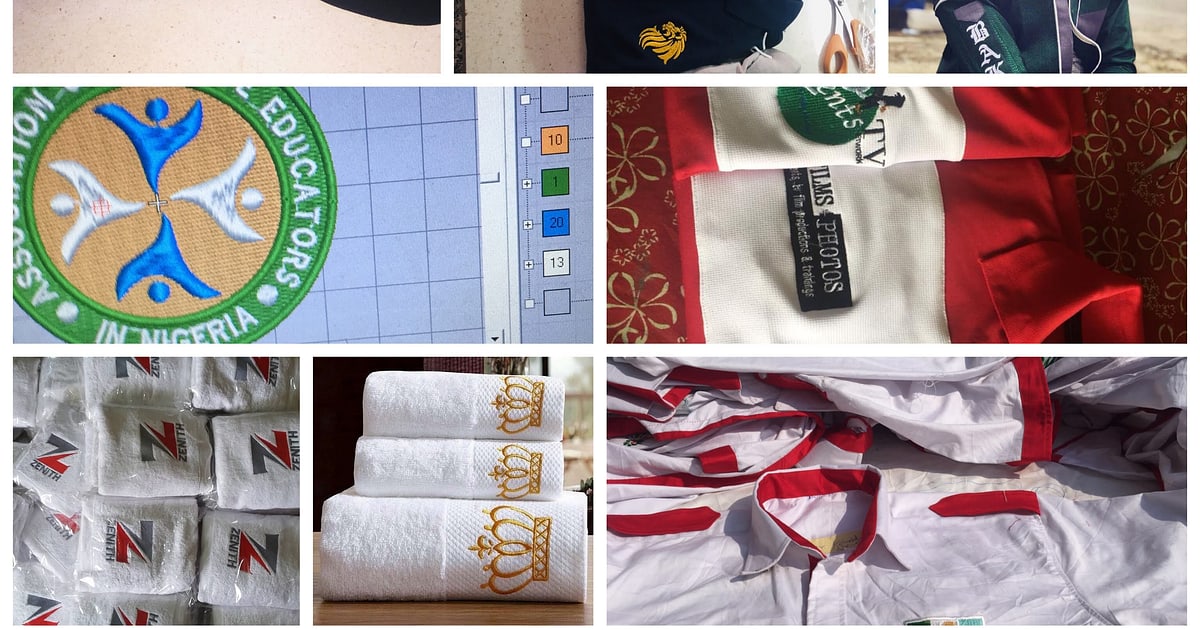
Look at the cover image. Association badges, corporate towels, school uniforms, sportswear, garment labels. Not one of those buyers went looking for embroidery as a hobby. They all had something that needed a name on it.
Notice how few of those are individuals. First embroidery customers are almost always organizations, because organizations buy in quantity and buy again.
This is the step most people skip and it's the one that changes everything.
You cannot sell embroidery by describing it. Nobody buys from a price list. What sells is a physical object in someone's hand, so make some before you have a single customer.
Stitch out a range: a polo with a chest logo, a cap, a towel, a badge on twill. Invent a business name if you like, or use your own. Keep them clean, keep them in a bag, and take that bag with you. Then photograph every one of them properly, in daylight, on the garment, because that becomes the thing you show on a phone when you don't have the bag.
Speculative samples feel like wasted material. They're the cheapest marketing in this business.
Pick what you stitch deliberately, too. Make the things your target buyers actually order rather than whatever design you enjoy. A tailor wants to see lettering and a chest logo on the fabrics they work with. A school wants a badge. Showing a beautifully executed piece of work that has nothing to do with the buyer in front of you is a wasted sample.
Not a pitch. A question and a demonstration.
Walk into a tailor's shop with your samples and say something close to: "I do machine embroidery. Who does yours at the moment, and how are you finding them?" Then hand over a sample and stop talking.
That works because it's not asking for anything. You've established what you do, found out whether they already have someone, and given them a physical thing to judge you by. If they're happy with their current supplier, you've lost five minutes. If they're not, and plenty aren't, you've just become the alternative.
The follow-up that matters: "Can I do one piece for you at no charge, so you can see the quality?" One sample garment costs you very little and it removes the entire risk from their side.
One thing to sort out first, because it's embarrassing to fix in front of a client.
Decide what you can actually deliver. Which garments you can handle, roughly how long a job takes you, what your minimum order is, and what happens if they want it in three days. You don't need a price list, but you do need to answer those without hesitating, because hesitation reads as inexperience even when the work is good.
Have a minimum order in mind from the start. Hooping one shirt for a stranger takes nearly as long as hooping ten, and a business built on single pieces is a business that never gets an evening back.
The strongest temptation and the worst move.
Clients won on price leave on price, and they tell other people what you charged. Worse, you've set your own ceiling: it's very hard to raise a price on a client who started at your lowest.
Compete on the things you can actually sustain. Turnaround, quality, answering your phone, delivering when you said. Those are worth more than a discount to anyone running a business, and they cost you nothing but discipline. Our guide to starting a computerized embroidery business works through pricing the job properly.
One exception worth making: a free or cheap first sample is fine, because it's marketing with a clear end. An ongoing discount is not.
Most people finish a job, get paid, and wait. The work is in the ten minutes after delivery.
Photograph it before it leaves. Every single job. That's your portfolio and it costs nothing while the garment is still in your hands.
Ask who else they know. Directly, while they're pleased with the work. "Do you know anyone else who needs this kind of thing?" A satisfied client on the day of delivery is the most willing they will ever be.
Ask what else they need. They ordered polos. Do they have caps? Aprons? Towels? Bags? Most clients only think of the thing they came for.
Diarise the reorder. Schools order at the same point each year. Associations have anniversaries. Contact them before they contact you and you'll usually get the job without competing for it.
Social media is worth doing and it is not where your first work comes from.
Embroidery is a physical product with delivery attached, and early on your advantage is being nearby. Someone can bring you the garments, see the sample, collect the same week. That's a real reason to choose you over a cheaper shop three states away.
Use the online side to support the local effort rather than replace it: post finished work, so when someone you met last week looks you up, they find evidence. Show the process too, because people find machines interesting and it makes you look like someone who does this properly.
It feels unnecessary with three clients and impossible with thirty, so start at three.
Who they are, what they ordered, which design and file, what thread colors, what you charged, and when they're likely to reorder. That record is what turns a scatter of jobs into a business you can plan, and it's what EMBBA exists to hold: orders, clients, pricing and production together rather than across a notebook and three chats.
Getting first embroidery customers is a sales problem. Keeping them is a quality problem, and quality here mostly means the file.
A client remembers the order that came back with the lettering closed up or the fabric puckered. If you're outsourcing your digitizing, you're trusting someone else with the thing your reputation rests on, which is the argument for learning it in our Digitizing Mastery course. And for designs that aren't a client's own logo, EmbGig saves you the wait.
Make one. Stitch samples on your own stock, photograph them properly, and show those. Nobody asks whether the sample was a paid job.
One sample piece, yes. Ongoing free work, no. The first is marketing with a clear end, the second becomes an expectation.
What the job is worth, including your machine time. Starting low to win the work sets a ceiling you'll struggle to lift later.
Not to start. Small clients pay individuals happily. It starts mattering when you approach schools, larger companies and anyone with a procurement process, which is exactly the work worth having, so treat it as something to sort out early rather than first.
Longer than you'd like, and it moves in steps rather than smoothly. One tailor or one school can change your month, which is why the first few relationships matter more than the number of people you speak to.
Find people already buying embroidery, put a physical sample in their hands, ask who currently does theirs, and don't win the job on price. Then photograph everything, ask for the referral on delivery day, and write down when they'll need you again.
The Academy turns articles like this into proper courses, with video lessons, assessments, and people to learn alongside.