
Machines here die of neglect long before they wear out. Here's the five minutes a day and the twenty minutes a week that prevent most faults, and what to skip.

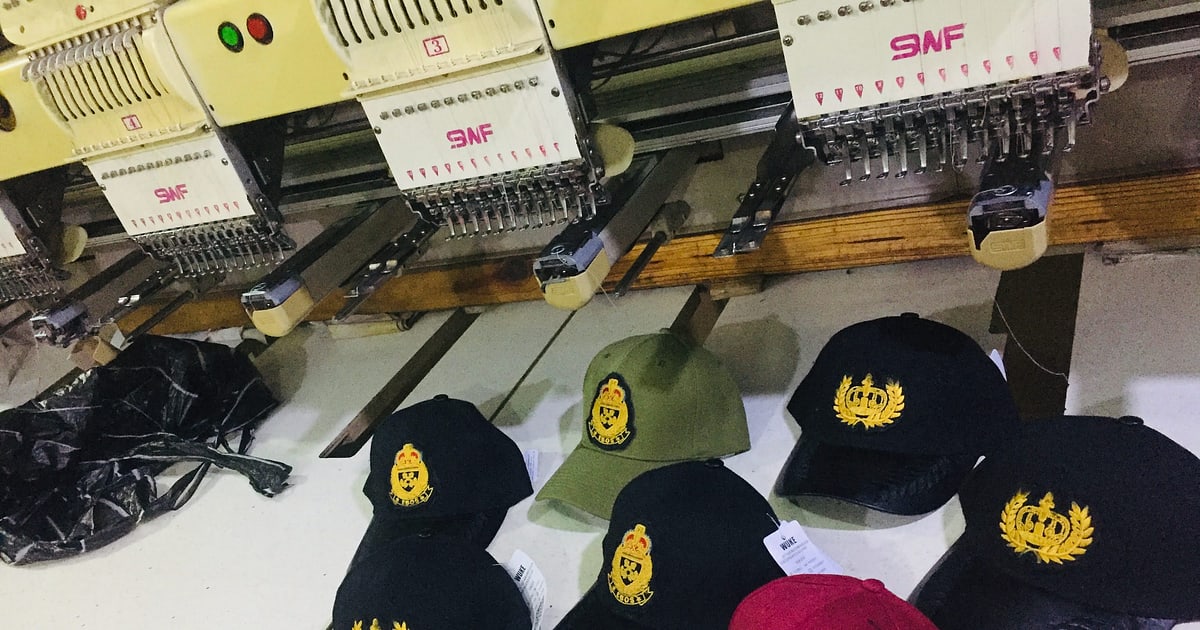
Embroidery machines almost never die of old age. They die of lint, dry hooks and bent needles left in place, which is a different thing entirely because all three are free to prevent.
The other reason to care is that most of what gets diagnosed as a tension fault or a bad file is actually a dirty machine. Get the machine maintenance right and a whole category of problems stops happening.
That's it for daily. It genuinely takes five minutes and it prevents more faults than everything else combined.
The rotary hook is the part that matters. It runs at speed, metal against metal, and it needs oil more often than most people give it.
Frequency depends on how much you run, not what day it is. Many makers specify oiling the hook after a few hours of actual running, and your manual is the authority. Once a day is a reasonable floor for a machine in regular use.
Two mistakes are common. Under-oiling, which is the usual one, and over-oiling, which puts oil on the next garment. A drop is a drop, not a squirt, and after oiling it's worth running the machine briefly on scrap before a real job.
Use proper sewing machine oil. Not general purpose oil, not penetrating spray, not anything with WD in its name. Those are cleaners and they will strip the lubrication you needed.
People treat needles as part of the machine. They're closer to blades: they blunt, they bend, and they cost almost nothing.
Change them at the start of a significant run, whenever the thread has been misbehaving, after any strike on a hoop or a frame, and on a schedule based on running hours rather than a feeling. A blunt needle makes ragged stitching and holes in fabric. A bent one causes breaks and skipped stitches, and it announces nothing at all on the screen.
Match the needle to the fabric too. Sharp points for wovens, ball points for knits, and the right size for the thread you're running.
Worth putting in money terms, because five minutes a day sounds like an imposition until you price the alternative.
A machine down for a week is a week of orders you can't take, on top of whatever the repair costs. A hook damaged by running dry is a part and a technician visit. Oil marks on a client's garments is a remake. And the quiet one nobody counts: a machine that breaks thread twice as often as it should is costing you an operator's attention all day, every day, without ever actually failing.
Against that, the daily routine is five minutes and a brush. There is no other maintenance decision in this business with that return.
This is where imported maintenance advice stops being useful, because it was written for climate-controlled workshops with reliable power.
Dust. The single biggest environmental factor. It gets into everything, mixes with oil into a paste, and wears moving parts. Cover the machine whenever it's idle, keep it away from open doorways, and clean more often than the manual suggests.
Power. Surges and dips do real damage to control boards, and a board is one of the expensive parts. Run the machine through a stabilizer sized for it, and if you have backup power, test it under load rather than assuming. Our guide to choosing the right embroidery machine makes the same case at purchase time.
Damp. Rust on the hook and needle bar area comes from humidity as much as anything. A machine that sits unused for weeks in a damp room needs a wipe and a light oil before it runs again.
Thread breaking more often than it used to on designs that used to run clean. Tension that keeps drifting. A machine that's noisier than you remember. Oil marks appearing on garments. Registration slipping on cap work.
Any of those is the machine asking for attention rather than a new setting. Chasing them with adjustments is how people end up convinced their digitizing has gone wrong, which our post on thread tension problems goes into.
Two habits that separate shops that keep running from shops that stop.
Write down what you did and when. Oiling, needle changes, anything replaced, anything a technician touched. Machine maintenance you can't remember doing is machine maintenance you probably didn't do, and a record also tells you when a part is wearing out faster than it should.
And hold a few spares: needles in the sizes you use, a spare bobbin case, and whatever your dealer says fails first on your model. Being down for three days waiting on a part that costs very little is a bad trade. That's also why buying from someone who stocks parts matters, as our roundup of China embroidery machines argues.
If you already track jobs and clients in EMBBA, the service log belongs alongside them rather than in a separate notebook that goes missing.
Cleaning, oiling, needles, bobbin cases and tension are yours. Timing, the hook assembly, motors and boards are not, unless you know the machine well.
The line is roughly this: if the fix requires moving something that was set at the factory, and you don't know exactly how to set it back, stop. A shifted hook assembly is a quick job for someone who knows the model and an expensive week for someone learning on your machine.
Follow the manual, and measure it in running hours rather than days. For a machine in daily use, oiling the hook at least once a day is a sensible floor.
At the start of a big run, after any thread trouble, after any strike, and otherwise on a regular schedule. They're cheap enough that changing one unnecessarily costs nothing.
No. Sewing machine oil only. Household and penetrating oils will clean the lubrication off the parts you were trying to protect.
Assume nothing was done. Full clean of the hook area and under the needle plate, fresh needles all round, oil everywhere the manual says, and a new bobbin case if the old one looks worn. Then run a test design and see what it tells you before taking on client work.
Yes, directly. Lint changes tension, a dry hook affects the stitch, and a bent needle produces faults that look like digitizing errors. Most machine maintenance is quality control by another name.
Five minutes a day on lint and needles, twenty minutes a week on the hook area and thread path, oil by running hours using the right oil, and cover the machine against dust. Do that and most of the faults in this trade never reach you.
The Academy turns articles like this into proper courses, with video lessons, assessments, and people to learn alongside.