A good digitizer saves you time, thread and embarrassment. A bad one costs you all three, plus the client. Here's how to tell them apart before you hand over money.

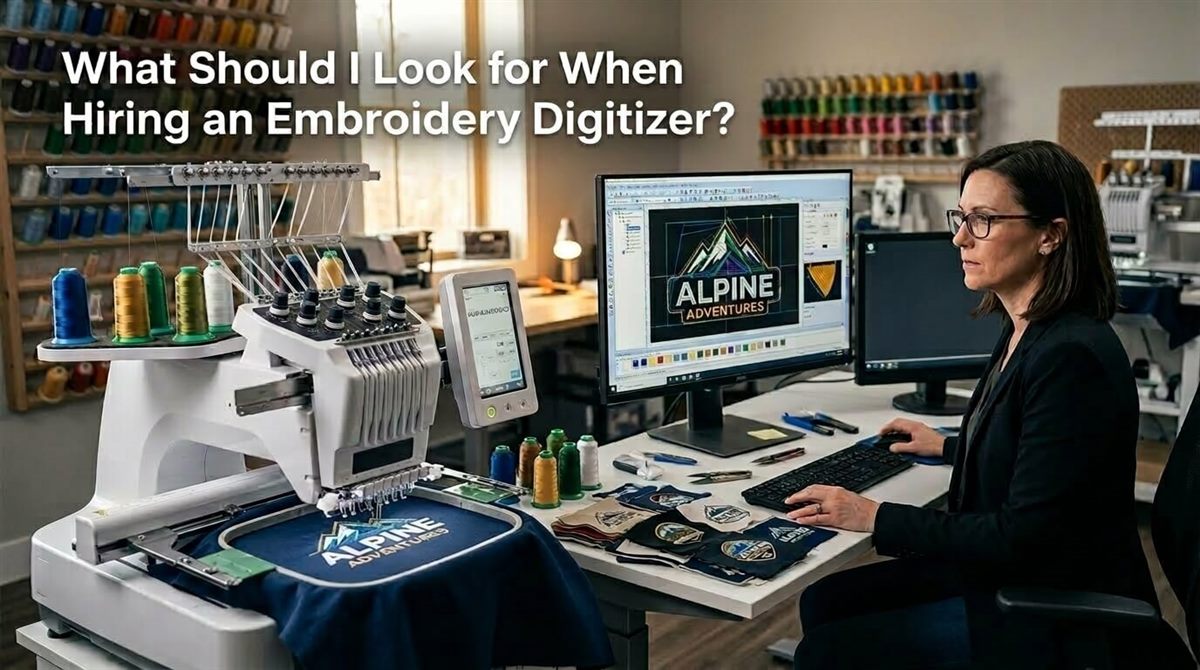
If you're going to keep outsourcing your digitizing, at least pick the right person. A good digitizer saves you time, thread and embarrassment. A bad one costs you all three, plus the client. Here's how to tell them apart before you hand over money.
Anyone can show you a screenshot that looks perfect. A design only proves itself on fabric. Ask to see a photo of the actual stitch-out, ideally on a fabric like yours. If they can't or won't show you real embroidery, that tells you what you need to know.
This is the single biggest tell. A digitizer who knows their craft asks about your fabric before they start. Cap or polo. Cotton or fleece. Stretchy or stiff. The same logo needs different underlay and compensation depending on the answer. If they take your artwork and never ask, they're digitizing blind.
Sort this before you pay, not after. How long will it take? What happens if the first stitch-out is wrong? A professional expects to tweak a file after a test run. That's normal. Someone who treats every fix as a fresh invoice is going to be painful on every job.
Every point on this page comes down to one thing: you're trusting someone else with a skill you don't have yet. The moment you learn to digitize, the whole problem disappears. No waiting, no per-design bill, no gambling on whether the file will run.
Most of my students are digitizing the basics within a week. If you'd rather own the skill than keep hiring for it, our Digitizing Mastery course takes you from the ground up, including the agbada, flap-and-pocket and monogram work most digitizers can't do at all.
The Academy turns articles like this into proper courses, with video lessons, assessments, and people to learn alongside.